The Art of the Unfinished: Why Leaving Things Incomplete Is the Most Radical Thing You Can Do Right Now
Our website is called ABCDF∞.
Not ABCDEFG. Not the whole alphabet. Not a tidy, finished sequence that starts at A and ends at Z with a bow on top. We skip a letter, throw in an infinity symbol, and call it a day. It was a design choice. It was also, we've come to realize, a philosophical position.
Because what does it mean to leave something unfinished on purpose? In American culture — a culture that invented the five-star review, the season finale, and the concept of "closure" — incompleteness is usually treated as a bug, not a feature. You finish your plate. You finish your degree. You finish the project. Done is good. Undone is a problem.
But something is shifting. Quietly, persistently, and with increasing confidence, a growing cohort of American artists, musicians, writers, and installation designers is making a different argument: that the unfinished work isn't a failure. It's a frontier.
The Tyranny of Done
Let's be honest about what "finished" usually means in American creative culture. It means packaged. Optimized. Ready for consumption. A finished album has a track listing, a runtime, and a release date. A finished novel has an ending that resolves, or at least gestures toward resolution. A finished painting goes behind glass.
Finished, in other words, often means closed.
And closing a work of art is a specific kind of violence — a violence most creators commit without thinking about it, because that's how the industry works, because that's what audiences expect, because the alternative feels uncomfortably like giving up.
But what if the alternative is actually giving more?
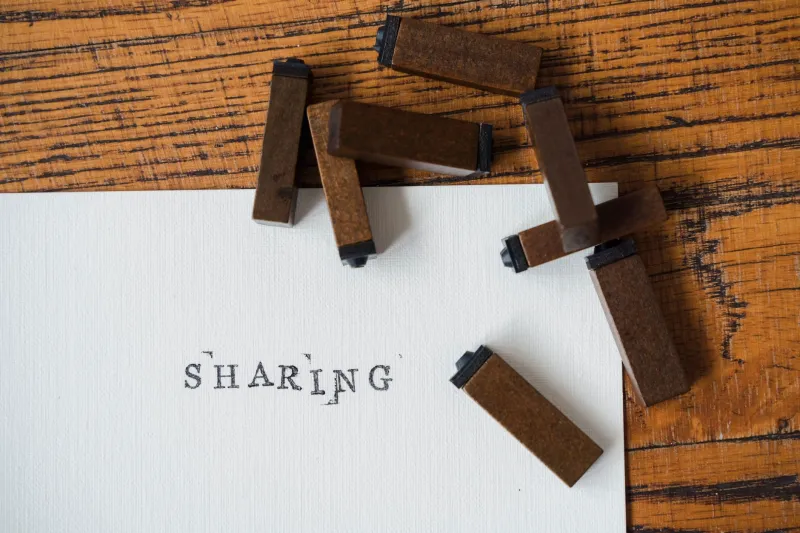
Philadelphia-based installation artist Yolanda Marsh has spent the last four years building Sentence Fragment, a room-sized text installation in which visitors encounter the beginnings of hundreds of sentences — printed on walls, floor, ceiling — that simply stop. Mid-thought. Mid-word, sometimes.
"People walk in and immediately feel anxious," Marsh says. "They want to finish the sentences. They start filling in the blanks out loud. And that's exactly the point. The work isn't done. They're the work."
Unfinished Albums and the Sound of Ellipsis
In music, the tradition of the unfinished work is older than rock and roll — Schubert's "Unfinished Symphony" has been charming and frustrating audiences since the 1820s. But contemporary American musicians are doing something different: they're choosing to leave things open-ended, and they're framing that choice explicitly.
Portland-based experimental musician Declan Frey released what he called a "perpetual album" in 2022 — a project titled Draft that exists as a continuously updated file. Listeners who downloaded it in January received a different version than those who grabbed it in October. Tracks appear, disappear, and mutate. There's no final version because Frey has publicly committed to never finishing it.
"Every album I'd ever made felt like a taxidermied version of the music," Frey explains. "It was alive when we were making it, and then we killed it and put it on a shelf. I wanted to make something that stayed alive."
He's not alone. Open-source music projects, collaborative sound archives, and "living scores" — compositions designed to be altered by performers each time they're played — are proliferating across the American indie and experimental music scenes. The logic is consistent: completion is a kind of death, and these artists are opting for a different relationship with time.
The Interactive Installation and the Audience-as-Author
Perhaps nowhere is the incompleteness movement more literal than in interactive installation art, where the audience isn't just a witness but a co-creator — and often the only reason the work exists at all.
At the Los Angeles Museum of Contemporary Art's 2023 open call exhibition, artist collective Null & Void presented Whitespace — a gallery room containing nothing but a single instruction printed on the wall: "Finish this." Visitors left objects, words, drawings, and photographs. By the end of the run, the room was dense with human response. The collective's original contribution? A blank room and a two-word prompt.
"We got accused of laziness," says collective member Priya Sundaram with a laugh. "Which was kind of the reaction we wanted. Because the question is: why is providing a container for other people's creativity considered lazy? Why is the artist's job to fill the space rather than open it?"
This question — who is responsible for completing a work of art? — sits at the heart of what might be called the incompleteness movement. And it has real implications for how we think about authorship, ownership, and the relationship between creator and audience.
Infinity as Honest Branding
When we named this site ABCDF∞, we were, admittedly, being a little cheeky. The missing E felt punk. The infinity symbol felt ambitious. But the more we sit with it, the more we think the name is actually doing something true.
The ∞ doesn't promise an ending. It doesn't tell you where the alphabet goes after F. It opens a door and leaves it open. In a media landscape where every publication promises to give you the complete picture, the full story, the definitive ranking — we're saying: here's some of it. Here's a direction. Go.
That's not a cop-out. That's an invitation.
And increasingly, it seems like the most interesting creative work in America is structured around exactly this kind of invitation.
The Philosophical Case for the Incomplete
There's a long intellectual tradition here that the art world is finally catching up to. Umberto Eco wrote about the "open work" in 1962 — the idea that a text is never truly finished because it's completed differently by each reader. Derrida spent a career arguing that meaning is always deferred, always in process. Even in American pragmatism, the philosopher John Dewey insisted that experience is inherently ongoing, that the clean ending is a fiction we impose on a continuous flow.
What's new isn't the philosophy. What's new is that American artists are treating incompleteness not as a theoretical position but as a practical creative strategy — and audiences are responding.
"There's something deeply relieving about a work that doesn't pretend to be over," says Marsh. "We're all living inside unfinished sentences. It's nice when the art admits it."
What 'Done' Even Means Anymore
We're not going to pretend there's no loss in the unfinished. There's something genuinely satisfying about a perfectly resolved chord progression, a novel that sticks the landing, a painting that feels complete in itself. Finished things have their own beauty. We're not here to cancel closure.
But we are here to argue that incompleteness deserves to be taken seriously as a creative mode — not as a shortcut, not as an excuse, but as a deliberate, rigorous, and often more honest way of making things.
In a culture that treats the loading bar as a moral imperative, choosing to leave something open is a small act of rebellion. It says: this doesn't belong to me alone. It says: meaning isn't fixed. It says: you're not done with this yet, and neither am I.
ABCDF∞.
We'll leave the rest to you.