Stitched in Stone, Lost in the Cloud: The Slow Death of the American Monogram
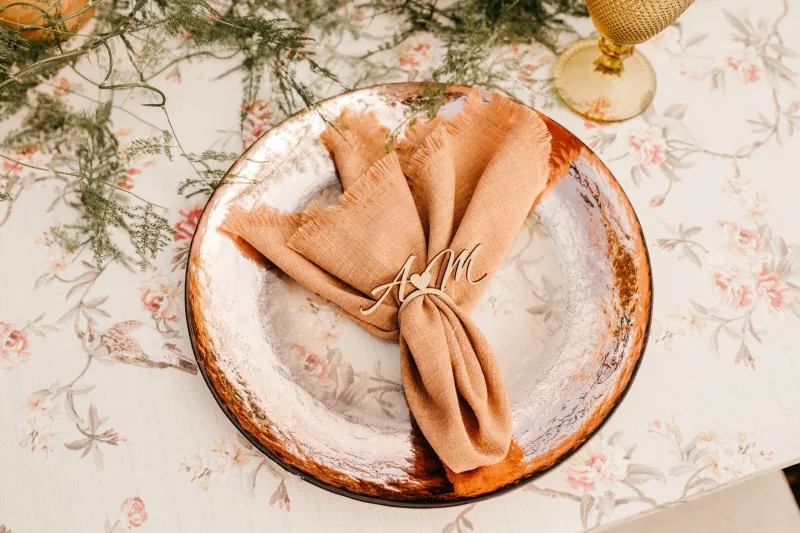
There is a cedar chest somewhere in rural Tennessee — probably several thousand of them, actually — packed with ivory linens embroidered in looping script. Pillowcases. Handkerchiefs. Guest towels that have never touched a single guest. Each one stamped with three interlocking letters that once meant something enormous: This belongs to a person. This person has a name. This name matters enough to stitch it into fabric that will outlast them.
That is, more or less, the entire philosophy of the monogram. And it is, more or less, dying.
At ABCDF∞, we spend a lot of time thinking about what letters do when they stop being purely functional — when they become symbols, identities, art objects unto themselves. The monogram is maybe the oldest and most democratic version of that experiment. It took the raw material of the alphabet and said: pick three, make them yours, put them on everything. For a couple of centuries, Americans were extremely enthusiastic about this proposition. Now, not so much.
Three Letters Walk Into a Trousseau
The monogram did not start in America. Nothing good ever does. It arrived from aristocratic Europe, where royal families had been stamping their initials onto coins, seals, and weaponry since roughly the time everyone else was figuring out how bread worked. By the 18th century, the monogram had trickled down from royalty to the merchant class, and by the time it crossed the Atlantic, it had fully democratized into something any family with a linen budget and aspirations could claim.
In American culture, the monogram hit its stride somewhere between the Civil War and the mid-20th century. It was on the briefcases of lawyers in Philadelphia. It was pressed into the leather seats of automobiles in Detroit. It was stitched into the corners of wedding quilts in Georgia and carved above the doorways of brownstones in Brooklyn. The logic was simple and almost poignant: in a country still figuring out who it was and who got to matter, putting your initials on things was a small, insistent act of self-definition.
The traditional American monogram — first name initial, larger last name initial in the center, middle name initial on the right — is itself a tiny piece of graphic design philosophy. The surname dominates. The individual flanks it. Family first, person second, but the person still gets two letters in the conversation. It is, if you squint, a surprisingly sophisticated negotiation between self and lineage.
The Craftspeople Still Holding the Thread
Walk into Heirloom Stitch, a small embroidery shop outside of Charleston, South Carolina, and the walls are covered in sample monograms the way a dentist's office is covered in teeth diagrams — except considerably more beautiful and with significantly less anxiety. Owner Delores Fitch has been monogramming since 1987 and has exactly zero plans to stop.
"People act like it's an old lady thing," she says, feeding a bolt of cream linen through a machine that costs more than most used cars. "But I did forty-seven monogrammed pieces for a wedding last spring. The bride was twenty-six. The groom cried when he saw the pillowcases."
Delores is part of a small but vocal community of monogram artisans who will tell you, with the conviction of people who have seen trends come and go, that the monogram never actually left — it just got quieter. The evidence is hard to dismiss. Wedding registries in the South still list monogrammed towel sets as a standard ask. Certain corners of prep culture never stopped treating the embroidered polo collar as sacred ground. And then there is streetwear.
Streetwear Found the Monogram and Made It Loud
Here is something the cedar chest crowd did not see coming: the monogram's most energetic contemporary revival is happening not in bridal boutiques but on hoodies, basketball shorts, and custom-painted denim jackets. The logic, when you look at it, is identical to the Victorian parlor version — this object belongs to a specific person and that specificity is the point — but the aesthetic is gloriously different.
Custom streetwear brands operating out of Atlanta, Los Angeles, and Chicago have been offering hand-painted and embroidered monogram services for years now, and the clientele skews young, loud, and deeply uninterested in the idea that initials are something your grandmother puts on guest towels. For them, the monogram is closer to tagging — a mark of presence, a declaration that you exist in a particular body with a particular name and you would like the jacket to reflect that.
It is, honestly, the most ABCDF∞ thing imaginable: taking the alphabet's most personal application and refusing to let it calcify into nostalgia.
What We Lost When We Lost the Monogram
So if the monogram is still alive in wedding culture and streetwear and the stubborn embroidery shops of the Carolinas, why does it feel like something is missing?
Because the everyday monogram is gone. The casual, unremarkable, Tuesday-morning monogram that used to live on a coffee mug or a pen or the inside of a coat collar. The monogram that said nothing more dramatic than I am a person who uses this object regularly and I have initials. That version — the mundane, intimate, slightly fussy version — has been almost entirely replaced by a different system of identity markers.
We have usernames now. We have @ handles and profile pictures and digital signatures. We have ways of branding ourselves that are faster, cheaper, and require no cedar chest. The trade-off is that none of them are physical. None of them can be embroidered into something that survives you. None of them will make a groom cry when he sees the pillowcases.
There is a particular kind of permanence that the monogram offered — a commitment to your own name that the digital world finds slightly embarrassing. To monogram something is to say: I will have these initials forever. I am betting linen on it. In an era of rebrandings and username changes and the general sense that identity is a work-in-progress, that kind of conviction reads almost as radical.
The Letters Are Still There
The alphabet is not going anywhere. Twenty-six letters, endlessly rearranged, endlessly argued over, endlessly repurposed — that is the whole game, and the monogram was always just one move in it. A personal move. A slow, careful, slightly vain move that said: out of all possible combinations, these three are mine.
Maybe that is exactly why it feels worth mourning. Not because embroidered towels are inherently important, but because the impulse behind them — the desire to take three letters and make them mean you, specifically, permanently, in a way that can be touched — is an impulse that deserves more than a username and a profile pic.
Somewhere, a machine in Charleston is stitching someone's initials into linen right now. Somewhere, a kid in Atlanta is getting their monogram painted on a jacket in colors their grandmother would not understand but would probably, if pressed, recognize as the same basic idea.
The letters are still there. We just have to decide, again, what we want to do with them.