Spell It Right or Go Home: The Small-Town Spelling Bee Is Dying and It's Taking Something Real With It
Spell It Right or Go Home: The Small-Town Spelling Bee Is Dying and It's Taking Something Real With It
Let's be honest about something: the word chiaroscuro has never been relevant to anyone's daily life in Harlan County, Kentucky. And yet, for decades, some kid stood at a microphone in a school gymnasium somewhere in Appalachia and spelled it correctly, letter by letter, to a room full of people who clapped like they'd witnessed a miracle.
Because they had. Sort of.
The small-town spelling bee was never really a spelling bee. It was a civic ceremony dressed up as a vocabulary test. And it's disappearing.
The Gymnasium as Sacred Space
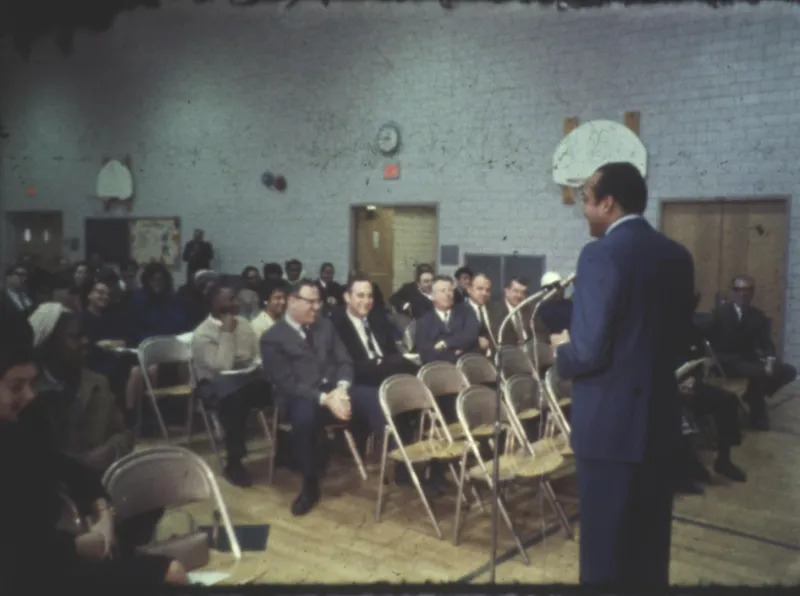
Picture the setup, because it matters: folding chairs in uneven rows. A microphone that feeds back if you stand too close. A banner that's been reused since 1987, the year someone laminated it without being asked. A panel of judges that includes the school principal, the owner of the hardware store, and — for reasons no one can fully explain — a retired postal worker named Gerald.
This is the small-town spelling bee. It smells like floor wax and nervous children. It is, without question, one of the great American art forms.
The communities that hosted these events — and there were thousands of them, scattered across every state from Maine to New Mexico — were doing something that looked like education but functioned like identity. The words chosen for local bees weren't random. They were curated, consciously or not, to reflect what a particular place valued, feared, aspired to, or simply knew from daily life.
A farming community in the Central Valley might cycle through agricultural vocabulary that would stump most urban kids. A mill town in the Carolinas had its own technical lexicon. A fishing village in Alaska operated with a completely different alphabet of relevant knowledge. The spelling bee was a mirror, and what it reflected was here, not everywhere.
Three Towns, Three Funerals
Reporting for this piece took us to three communities that have, in the last decade, watched their local spelling bees either fold entirely or get absorbed into regional and national franchise structures that scrubbed out all the local flavor.
In a small town in eastern Iowa, the annual spelling bee ran for forty-one consecutive years before quietly not happening in 2019 and then, thanks to a pandemic, not happening again, and then just... not happening. The woman who organized it for the last eighteen years of its life — a retired fourth-grade teacher who requested we not use her name but did agree to be quoted — put it simply: "Nobody wanted to do the administrative work anymore. And the kids were already doing that online thing."
The online thing. It comes up in every conversation about what killed the local bee.
In a mountain town in western North Carolina, the spelling bee survived slightly longer but transformed into something its founders wouldn't recognize. It's now a qualifier event for a regional competition with standardized word lists, corporate sponsors, and a livestream. The gymnasium is still there. Gerald the postal worker is, remarkably, still a judge. But the words are no longer local. They're imported from a central list designed to be fair across all demographics and regions — which means they're designed to be from nowhere in particular.
Fairness, it turns out, is the enemy of flavor.
The third town, a coastal community in southern Louisiana, is the most interesting case. Their bee didn't die — it mutated. Faced with declining school enrollment and budget cuts, organizers opened the competition to adults. Then to senior citizens. Then to anyone who showed up. What they have now is less a spelling bee and more a community word party, held annually in the parking lot of a bait shop, with a trophy that has passed through so many hands it's been re-engraved four times.
It's chaotic. It's barely organized. It's the most alive version of the three.
What the Lost Words Tell Us
Here's where it gets genuinely interesting for a publication that thinks about letters for a living: the words that appeared on old local spelling bee lists are, in many cases, the only written record of what a community considered important enough to test.
A researcher at a small Midwestern university has spent the last several years collecting these lists — photocopied sheets, handwritten cards, the occasional spiral notebook — from defunct local bees across the country. The patterns are striking.
Religious vocabulary appears more frequently in Southern lists. Technical and industrial terms cluster in Rust Belt communities. Agricultural words dominate the Plains states. Nautical terms show up along the coasts in ways that would confuse an inland child completely. These aren't standardized word lists. They're oral histories encoded in spelling.
When those bees disappear, those lists don't get archived. They get thrown away. The letters disperse. The words go back to being just words, with no record of the specific place that once thought them important enough to make a child stand up and spell them in front of the whole town.
The Franchise Problem
The Scripps National Spelling Bee is a great institution. This is not an argument against it. But the nationalization of spelling competition has had the same effect on local bees that the nationalization of anything has on local versions of things: it provided a better-resourced alternative that made the local version seem smaller, less legitimate, less worth the effort of organizing.
Why run your own bee when the kids can just do the regional qualifier? Why maintain your own word list when there's a standardized one? Why rent the gymnasium and beg Gerald to come back one more year when there's a perfectly good digital option?
The answer — and this is the answer to a lot of questions about why local things matter — is that the local version was never just the thing itself. It was the thing plus the place. Spelling plus community. Letters plus identity.
A word spelled correctly on a laptop in a bedroom is spelled correctly. A word spelled correctly at a microphone in a gymnasium in front of your whole town, by a nervous kid whose hands are shaking, in a room that smells like floor wax — that's something else. That's the alphabet doing what it was always supposed to do: connecting people to each other through the shared, improbable act of getting the letters in the right order.
The Letters a Place Holds Dear
At ABCDF∞, we've written about what happens when you skip a letter, add one, break the sequence. The small-town spelling bee is, in its own way, the same experiment run in reverse: what happens when a community decides which letters — which words, which knowledge — are worth preserving?
The answer varies by zip code. That's the whole point.
Somewhere in America right now, there is probably a spelling bee happening in a gymnasium that smells like floor wax. Gerald, or someone very much like Gerald, is sitting at a folding table with a word list that someone typed up at home and printed on their own printer. The kids are nervous. The parents are recording on their phones. The microphone is feeding back.
It is imperfect and local and completely irreplaceable.
Spell it while you can.