Silence Is a Letter Too: What the Alphabet We Skipped Says About America
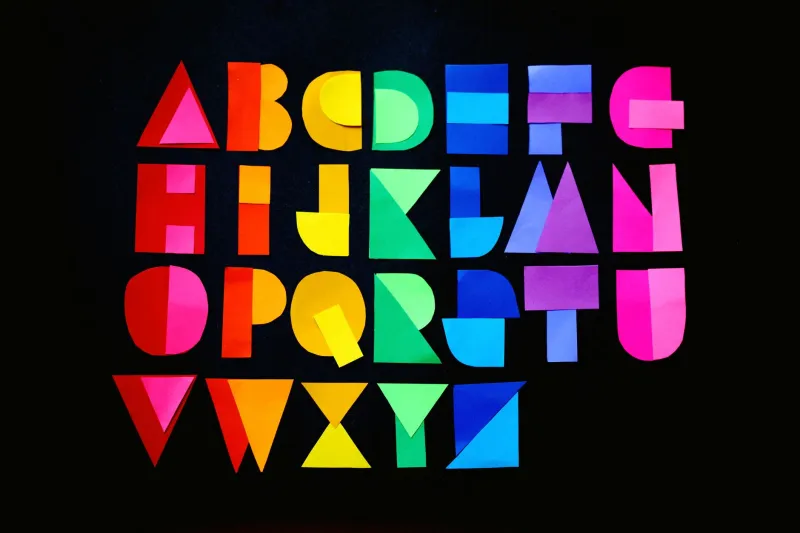
Let's start with the obvious thing nobody wants to say out loud: our domain name is broken. Not technically — it loads fine, the hosting bill gets paid, nobody's complaining to customer service. But if you squint at abcdfghijklmnopqrstuvwxyz.com, you'll notice something is missing almost immediately. The E. The first vowel. The most common letter in the English language, responsible for roughly eleven percent of all written text in America, just... gone. Skipped. Moved past like an awkward family member at Thanksgiving.
And we did it on purpose.
But here's where it gets interesting: we're not the only ones.
The Loudest Silence in the Room
America has a long and storied tradition of strategic omission. We leave things out of constitutions. We redact documents. We bleep words on basic cable that everyone already knows. We build entire cultural vocabularies around what we don't say — the pregnant pause, the dog whistle, the polite euphemism. Language, it turns out, is as much about the gaps as the content.
Semioticians — the academics who study signs and meaning for a living, bless their hearts — have a term for this: absence as signifier. The thing that isn't there carries meaning precisely because it isn't there. When a president doesn't mention a war in a State of the Union address, that silence is a statement. When a brand drops a vowel from its name (looking at you, Tumblr, Flickr, and every startup that graduated from Y Combinator between 2008 and 2015), the omission is a personality choice.
So what does it mean when a site built entirely around the alphabet — the alphabet — quietly murders the letter E before the party even starts?
E Is for Everything We're Afraid to Say
The letter E is the workhorse of English. It ends love, home, hope, future, time. It lives inside freedom, peace, believe, change — basically every word that gets printed on a motivational poster in a middle school guidance counselor's office. E is the letter of American aspiration, and we dropped it from our name like a bad habit.
Maybe that's the point. Maybe aspiration is exhausting. Maybe the gesture of skipping E is a small, coded refusal to participate in the relentless optimism machine. Or maybe — and this is the reading we find more interesting — removing E forces you to notice it. Absence creates appetite. You didn't think about E once today until just now, and now you can't stop.
The Ones We Actually Kept
Here's the part that requires some forensic alphabet work. The domain isn't just missing E — it's abcdfghijklmnopqrstuvwxyz.com, which means after the skip, every other letter shows up eventually. The I is there. The O is there. The U makes it. The whole dysfunctional family arrives, just slightly late and a little disoriented.
Which raises a different question: what does it mean to keep a letter? To include it in your identity even after demonstrating that the rules are negotiable?
Take the letter I. In American culture, I is arguably the most loaded letter in the alphabet. It's the first-person singular. It's the self, the ego, the individual — the entire philosophical premise of a nation built on the idea that personal liberty is the highest value. We kept the I. Of course we kept the I. America would sooner drop the dollar sign than drop the I.
Then there's the letter U, which Americans have been quietly deleting from words like colour and honour since the 18th century, a petty act of linguistic independence that British people are still annoyed about. We kept the U in our domain. It's right there. Maybe that's reconciliation. Maybe it's just inertia.
What the Skipped Letters Would Have Said
If we're being honest — and honesty is a value this site nominally endorses — the letters Americans most struggle to say aloud aren't the weird ones. They're not X or Z or the underdog consonants celebrated in our previous coverage. The hard letters are the common ones embedded in common words: enough, sorry, wrong, help.
Think about how rarely American public discourse produces a clean, unqualified apology. Sorry if you were offended is not the same as sorry. The E in enough — as in, we have had enough of this — gets swallowed constantly in political speech, replaced by something softer, more deniable. The language of American power is a language of strategic vagueness, and the letters that build clarity are the first ones to go.
Designers know this instinctively. The history of American logo design is a history of strategic omission — the FedEx arrow that you either see immediately or can never unsee, the negative space in the Pittsburgh Zoo logo that hides a tree and a gorilla, the white space in minimalist branding that communicates luxury by communicating less. Every graphic designer who has ever been told to "make it breathe" understands that what you remove is as intentional as what you keep.
The Cultural Weight of What We Won't Write Down
There's a broader cultural argument here that goes beyond typography. America has entire categories of experience that resist easy articulation — grief that doesn't resolve neatly, joy that feels too big for words, rage that polite society keeps asking to be expressed more constructively. These aren't failures of vocabulary. We have the words. We have all the letters. We just keep choosing not to arrange them into the sentences that would mean something real.
The missing E in our domain isn't an error. It's an editorial. It's a reminder that the alphabet — like culture, like language, like the national conversation — is always a little incomplete, always skipping something, always asking you to notice the gap and decide what to do with it.
You can fill the gap with meaning. Or you can let the silence breathe.
We're going with both, obviously. We're a website that starts with A, skips E, and then keeps going all the way to infinity. That's not a mistake. That's a manifesto.
So What Do We Do With the Gaps?
The productive answer — the one that actually goes somewhere — is to treat every omission as an invitation. When a letter is missing, when a word goes unsaid, when a sentence stops short of its logical conclusion, that's not a dead end. That's a door.
American culture is full of doors that nobody's opened yet. Words we haven't learned to say without flinching. Sentences that would change things if we finished them. Letters that are right there in the alphabet, available, free, waiting — and we just keep skipping past them on the way to the next comfortable word.
The E will be fine. It's the most resilient letter in the language. It doesn't need us to include it in our domain name to survive.
But maybe we need to remember it's missing.
Maybe that's the whole thing.