Pictographs Are Winning: The Tiny Yellow Faces That Broke American Grammar Wide Open
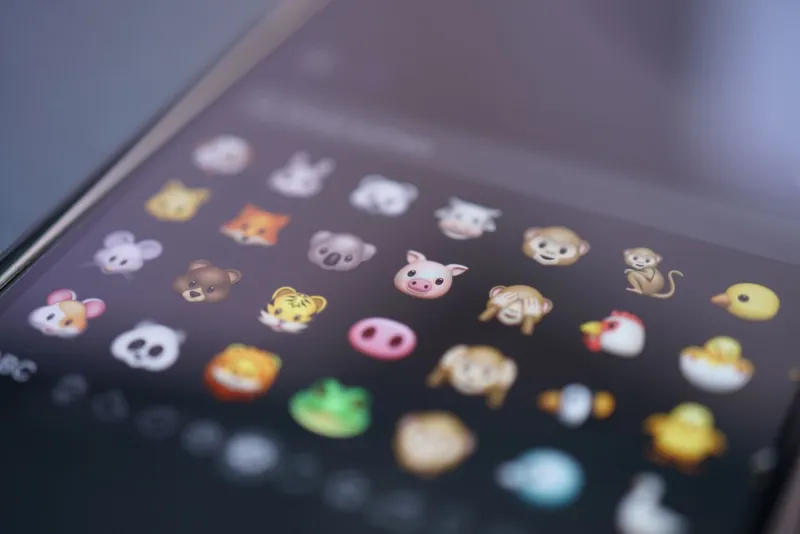
Somewhere around 2012, your aunt sent you a text that contained exactly one word and a smiley face, and you understood her completely. More completely, maybe, than if she'd written three paragraphs. That moment — replicated billions of times across billions of phones — was the quiet opening act of a typographic revolution that nobody bothered to schedule a conference for.
Emojis are not punctuation. They are not decoration. And they are absolutely, defiantly, not a dumbing-down of American communication. They are, if you ask the people who study language for a living, something far stranger and more interesting: a new visual grammar that arrived fully formed from the future and immediately made everything before it look slightly overdressed.
The Alphabet Already Had a Problem
Here's the thing that typography nerds will tell you if you catch them at the right hour: the Latin alphabet was never a perfect system. It was a borrowed, duct-taped, frequently revised tool that English speakers inherited and then proceeded to make even more chaotic with silent letters, borrowed phonemes, and spelling rules that exist mostly as historical accidents.
Emoji didn't destroy that system. The system was already wobbling.
What emoji did — and this is the part that gets designers genuinely excited — was introduce a visual layer that operates completely independently of literacy. You don't need to know how to spell "overwhelmed" to send the face with steam coming out of its ears. You don't need a grammar textbook to construct a sentence like 🌧️➡️☀️ and have someone understand that you're describing your mood improving. That's not language erosion. That's a new dialect forming in real time.
"What we're watching is the emergence of a pictographic register," says Dr. Celeste Marrow, a computational linguist at a mid-sized university in Ohio who has spent the last four years cataloguing emoji usage patterns across American social media. "It's not replacing written English. It's sitting alongside it and doing jobs that written English genuinely struggles with — conveying tone, softening demands, adding irony without a footnote."
The Designers Who Didn't See It Coming
Ask any typographer about emoji and watch their face do something complicated.
The people who spend their careers obsessing over kerning, baseline grids, and the philosophical difference between a serif and a sans-serif were not, it turns out, prepared for a communication system where the "font" is a tiny cartoon pizza. And yet here we are, and the pizza is thriving.
Jordan Kleiss, a Brooklyn-based type designer who has spent fifteen years working on editorial typefaces, describes her first serious engagement with emoji as "humbling in a way that was almost spiritual."
"I was working on this incredibly refined typeface," she says. "Months of work. And I watched my sixteen-year-old nephew communicate an entire emotional arc — frustration, resolution, triumph — using four symbols in thirty seconds. The efficiency was offensive. And then it was fascinating."
What Kleiss and others in the design community have come to recognize is that emoji operate by a completely different set of design rules — rules that are, if anything, more ancient than the Latin alphabet. Pictographic communication predates written language. The cave painters of Lascaux weren't tagging walls for vandalism; they were developing a visual vocabulary. Emoji are, in this reading, not the future of communication. They're the original version of it, running on better hardware.
Grammar, But Make It Chaotic
One of the more delightful developments in emoji linguistics is the emergence of what researchers call "emoji syntax" — the unwritten but widely understood rules governing how symbols combine to create meaning.
No one taught anyone that 💀 means "I am dead from laughter" rather than "I am describing mortality." No style guide explained that 🙃 is the most passive-aggressive character in the modern American emotional vocabulary. These meanings emerged organically, regionally, generationally — and they shift. The 🐐 went from being a goat to being the Greatest of All Time without a single press release.
This is language doing what language has always done: evolving faster than institutions can track it. The difference is that emoji evolution is visible, documented, and happening at a pace that makes traditional lexicographers dizzy.
"The Oxford English Dictionary took decades to add 'jazz' as a verb," notes Marcus Obi, a social media strategist in Atlanta who has built a following by analyzing internet communication patterns. "Emoji can acquire a completely new cultural meaning in three weeks if the right meme hits. That's not degradation. That's velocity."
The Liberation Argument (And Its Complications)
There is a genuinely compelling case that emoji have democratized expression in ways that written language — with all its gatekeeping around spelling, grammar, and vocabulary — never quite managed. A first-generation immigrant whose written English is still developing can send 🎂🎉 to a coworker and land the warmth perfectly. A child who hasn't yet mastered cursive can communicate joy or sadness with the same fluency as a PhD.
But the liberation argument has edges worth examining.
Emoji are not neutral. They are designed by corporations — primarily Apple, Google, and a Unicode Consortium that has, after years of pressure, expanded its skin tone options and added more representative symbols, but still makes choices about what exists and what doesn't. The alphabet of emoji is controlled. Someone decides whether a specific symbol gets to exist in the visual vocabulary. That's a different kind of power than the one that governs written language, but it's still power.
And there's the tone problem. Emoji that read as warm and sincere in one generational context read as deeply ironic in another. Send 😊 to a Gen Z colleague and you may have accidentally communicated menace. The visual grammar is not universal — it's fragmented by age, region, and subculture in ways that can create spectacular miscommunications.
Where This Leaves the Alphabet
Nobody serious is arguing that emoji will replace written language. The nuance required for a contract, a novel, a love letter that actually lands — that still needs words. But the conversation that emoji have forced is a useful one: what is language actually for?
If the goal is connection, then a well-placed 🫂 sometimes does more work than a paragraph. If the goal is precision, then the alphabet still wins, mostly. If the goal is emotional honesty — the raw, unfiltered, I-don't-have-words-for-this feeling — then the tiny yellow faces have been winning for years and we're only now catching up to that fact.
At ABCDF∞, we've always understood that the alphabet is not a closed system. It's an argument. Emoji joined that argument without asking permission, and the argument is better for it.
The letters are not losing. They're just finally getting some competition.