Forty Letters and a Ladder: The Dying Craft of the American Marquee
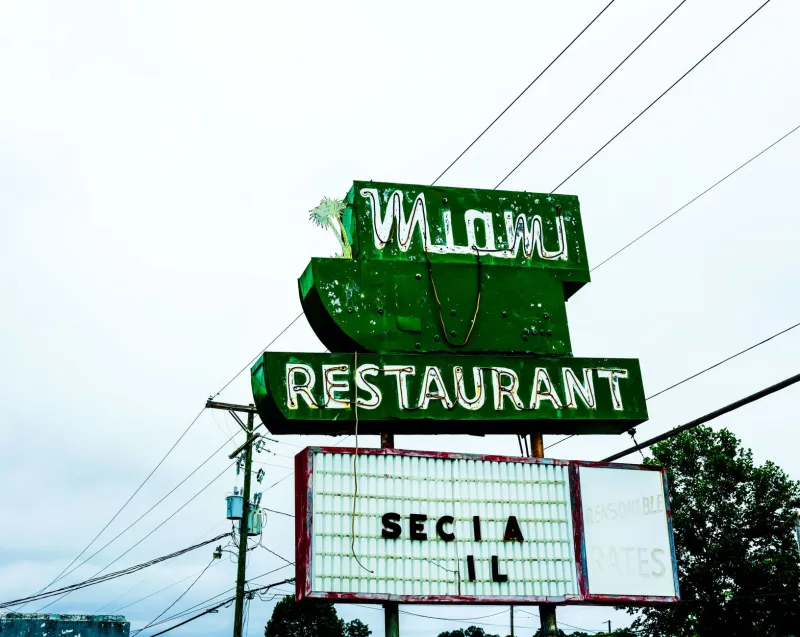
Let's say you run a diner in Macon, Georgia. You've got a marquee sign out front — one of those big backlit rectangles with two rows of changeable plastic letters, a handful of punctuation marks, and exactly zero kerning options. Every Monday morning, you drag out the letter box, grab the pole with the little suction cup on the end, and you compose. You are, whether you know it or not, a typographer, a poet, and a public address system rolled into one person standing on a stepladder in a parking lot.
This is the vanishing art of the American marquee, and it is considerably weirder and more beautiful than anyone gives it credit for.
The Original Social Media Post
Before Facebook events, before Instagram stories, before the algorithmic feed decided what your neighbors needed to know, there was the marquee. Churches announced sermon topics. Movie houses listed double features. Motels dangled their nightly rates alongside whatever philosophy the night manager felt like sharing at 11 p.m. Diners promoted the soup of the week. Little League teams got congratulated. Graduating seniors got their names misspelled in front of the whole town.
The marquee was, functionally, a public inbox and outbox combined — a place where a community could see what mattered to the people who ran the places they frequented. And unlike a tweet, it cost someone physical effort. You had to go outside. You had to find the letter "W" in the box (there are never enough W's). You had to commit.
That commitment is exactly what made it meaningful, and it's exactly what's disappearing.
The Constraints Were the Whole Point
Here's what digital signage people don't understand: the limitation was the feature, not the bug.
When you only have forty or fifty plastic letters — and half of them are lowercase E's because someone ordered wrong in 1987 — you have to make choices. Hard choices. Do you abbreviate "Wednesday" or do you drop the date entirely? Is the second line of your message worth sacrificing the exclamation point? Can "TONITE" do the work that "TONIGHT" was supposed to do? (It can. It always can.)
This is constrained writing in its purest American form. It's the haiku of the highway. And the people who do it well — the diner owners, the church secretaries, the motel managers who've been running the same sign for thirty years — develop an instinct for compression that most copywriters would kill for. They learn, through repetition and occasional public embarrassment, that fewer words hit harder. That a missing letter can become a joke. That a typo, left up for a week because nobody noticed, sometimes says more than the intended message ever did.
Profiles in Plastic Letters
In Albuquerque, a woman named Darlene has been running the marquee outside her family's Mexican restaurant since her father handed her the letter pole in 1998. She changes it every Thursday. She keeps a notebook of message drafts. She says the hardest part isn't the spelling — it's deciding what the restaurant needs to be that week. "Some weeks we need to be funny," she told a local paper a few years back. "Some weeks someone in the family died and we just put up the special and leave it alone."
In rural Tennessee, a Baptist church's marquee has become something of a regional landmark, less for its theology and more for its unintentional surrealism. The sign regularly runs out of I's and substitutes with exclamation points. The congregation has stopped correcting it. The congregation, frankly, loves it.
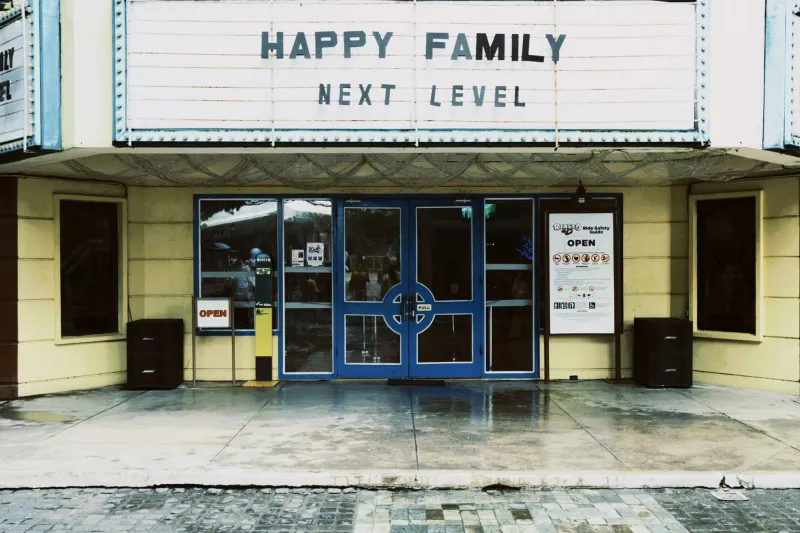
And in dozens of small towns across the Midwest, independent movie theaters — the ones that survived the multiplex era through sheer stubbornness — still have someone on staff whose unofficial job title is Marquee Person. They are the unsung heroes of American film culture. They are also, frequently, the ones who figured out that "DUNE PT 2" fits better than "DUNE PART TWO" and that audiences don't care either way as long as the popcorn is fresh.
What Gets Lost When the Screen Takes Over
The LED replacement sign is, objectively, more practical. It's brighter, more flexible, easier to update, more visible in daylight. You can change it from your phone. You can schedule messages in advance. You can use full sentences with proper punctuation and every letter of the alphabet represented equally, like some kind of utopian fantasy where Q and Z finally get their due.
But something goes with the plastic letters when they leave.
The LED sign has no fingerprints on it. No one stood in a parking lot at 7 a.m. deciding whether "HAPPY MOTHERS DAY" needed the apostrophe (it does, but the apostrophe is missing, so it doesn't get one, and somehow that feels more honest anyway). No one made a choice under constraint. No one left a slightly crooked R up for three weeks because fixing it required getting the ladder out again and it's been raining.
The imperfection of the marquee is a record of human presence. It says: a person was here, making do, trying to communicate, working within limits. That's not a flaw in the medium. That's the medium.
The Alphabet Has Always Been Rationed
There's something that feels deeply on-brand for this website in the whole marquee situation. ABCDF∞ — a name that begins with an omission, that skips E like the sign ran out — understands intuitively what marquee operators have always known: the alphabet is not a guarantee. You work with what you've got. You make meaning from the available inventory. You accept that some letters will always be scarce and some will always be abundant and your job is to compose something worth reading out of whatever's left in the box.
Every marquee message is, in its way, a small act of editorial bravery. It's a public declaration made under resource constraints, subject to weather, legible from a moving car, and utterly, wonderfully impermanent.
Someone will change it next week. The message will be gone. But for now, in front of a diner or a church or a motel off the interstate, forty plastic letters are spelling out something that matters to somebody. That's not nothing. That's almost everything.
How to Keep It Alive (If You Want To)
If you drive past a marquee sign and it's still got changeable letters on it, look at it. Actually look. Notice the spacing. Notice which letters are missing. Notice whether the message makes you smile or think or feel vaguely confused in a productive way. Notice that someone climbed a ladder to put those words there.
And if you happen to own a diner, a church, a motel, or a failing independent bookstore with a marquee out front: keep the plastic letters. Please. Get the ladder out. Make do with the letters you have. Misspell something occasionally. Leave the crooked R up for a week.
The alphabet is infinite. The marquee is not. That's the whole beautiful problem.