Cursive Is a Dead Language and Your Grandma's Letters Prove It
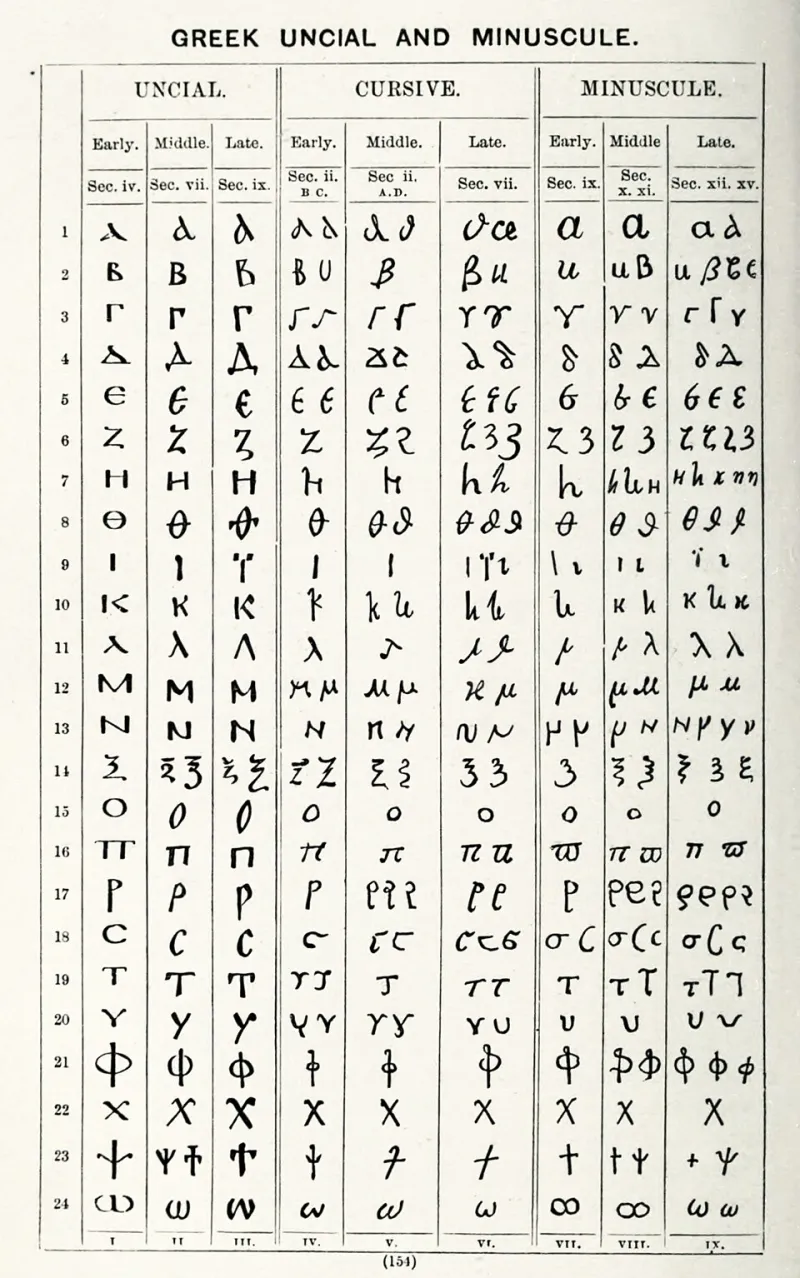
Photo: Isaac Taylor, Public domain, via Wikimedia Commons
Somewhere in America right now, someone is holding a letter they cannot read. It's written in careful, looping cursive—blue ink on yellowed paper, the handwriting of a grandmother or a great-uncle or someone who died before they could be asked to type it out instead. The letter might be a love letter. A will. A confession. An apology that arrived too late. Whatever it contains, it is, for a significant and growing portion of Americans, completely inaccessible. Not locked. Not encrypted. Just written in a script that nobody bothered to teach.
This is the cursive problem, and it is weirder and more consequential than the headlines usually bother to explain.
How We Got Here: The Short Version
Cursive instruction started disappearing from American public schools in the early 2010s, accelerated by the adoption of Common Core State Standards, which—crucially—did not require it. Schools, already stretched for time and resources, dropped it. Keyboards were the future. Printing was fine. Cursive was a relic.
The decision made a certain kind of practical sense in 2012. It makes less sense in 2024, when we're sitting on an enormous archive of American history written in a script that a substantial portion of the population can no longer decode. Census records. Military correspondence. Personal diaries. Legal documents. Letters that crossed oceans and survived wars and ended up in shoeboxes in attics, waiting for someone who can read them.
The irony is thorough. We digitized the documents to preserve them. We just forgot to preserve the ability to read them.
The Signature as Artifact
Here's a smaller, stranger consequence of the cursive collapse: the American signature is becoming a meaningless scribble. Not because people are being careless, but because a signature historically derived its meaning from being a stylized version of your name in cursive—a personal mark that was uniquely yours because it was rooted in a writing system you'd spent years internalizing.
For people who never learned cursive, a signature is just a vibe. A squiggle. An abstract mark that satisfies a legal requirement without carrying any of the personal identity it was supposed to encode. Some Gen Z signatories have essentially invented their own symbolic marks—which is interesting from an ABCDF∞ perspective (personal alphabets! invented glyphs! we love this!) but is arguably doing something to the cultural meaning of the signature as a concept.
And then, of course, there's the digital signature, which is just your name typed in a font that looks like cursive, which is not cursive, which is a font pretending to be handwriting, which is a whole different existential problem for another article.
What Gets Lost When a Script Dies
Language historians will tell you that when a writing system disappears, it takes things with it that can't be fully recovered. Not just the documents themselves, but the texture of thought that the system carried. Handwriting is not just a delivery mechanism for words. It's information about the person who wrote it—their speed, their mood, the pressure of their hand on the page, the places where the pen hesitated.
A typed document tells you what someone wrote. A handwritten document tells you something about how they were when they wrote it. That's a different thing entirely. That's the difference between a transcript and a recording.
When Americans under 30 look at a page of cursive and see—as many of them describe it—"just squiggles," they're not being dismissive. They're accurately describing their experience. The code is closed to them. The texture is there, the physical evidence of a person thinking and feeling and pressing pen to paper, but the meaning is locked behind a script literacy they were never given.
The Accessibility Argument Nobody Is Having
The debate over cursive in schools tends to get framed as tradition versus modernity, which is a comfortable frame that misses the more interesting question: whose history are we making inaccessible, and to whom?
For many Black American families, cursive documents include letters and records from the post-Civil War period—correspondence that represents some of the earliest examples of formerly enslaved people writing freely, documenting their own lives in their own words. For immigrant families, cursive letters from the old country are often the most direct connection to ancestors who never made the crossing. For Indigenous communities, cursive appears in treaty documents and government correspondence that remains legally significant today.
The inability to read cursive isn't evenly distributed in its consequences. It lands hardest on communities whose histories live primarily in handwritten documents rather than in the officially transcribed, digitized, and preserved archives of institutions that had the resources to do that work.
But Also: Handwriting Is Coming Back (Sort Of)
Here's the thing about declared-dead cultural practices: they have a tendency to get interesting right around the moment of death. Vinyl records. Film photography. Sourdough bread made from scratch in a pandemic. The death of a thing often precedes its transformation into an art form.
Cursive is starting to move in that direction. Brush lettering and hand-lettering have exploded as aesthetic practices—Instagram and Pinterest are full of people who never learned cursive in school but taught themselves something adjacent to it because they found it beautiful. Calligraphy classes fill up. Fountain pen communities thrive on Reddit. The act of writing by hand, slowly and deliberately, is being reclaimed as a form of mindfulness in a world that moves too fast for its own good.
This isn't the same as functional cursive literacy. Knowing how to make beautiful letterforms doesn't mean you can read a nineteenth-century census record. But it suggests that the human appetite for handwritten language hasn't disappeared—it's just been rerouted.
The Infinite Letter, Written by Hand
At ABCDF∞, where the alphabet extends past its official end into whatever comes next, we're interested in what happens at the edges of legibility and literacy. Cursive is living at one of those edges right now—not quite dead, not quite alive, readable by some and invisible to others, carrying history that may or may not survive the generation that can't access it.
The letters in your grandmother's attic are still there. The ink hasn't faded that much. The words are still waiting.
Somebody just needs to learn how to read them again.