Alphabets on Life Support: The Obsessives Keeping America's Forgotten Scripts From Dying Twice
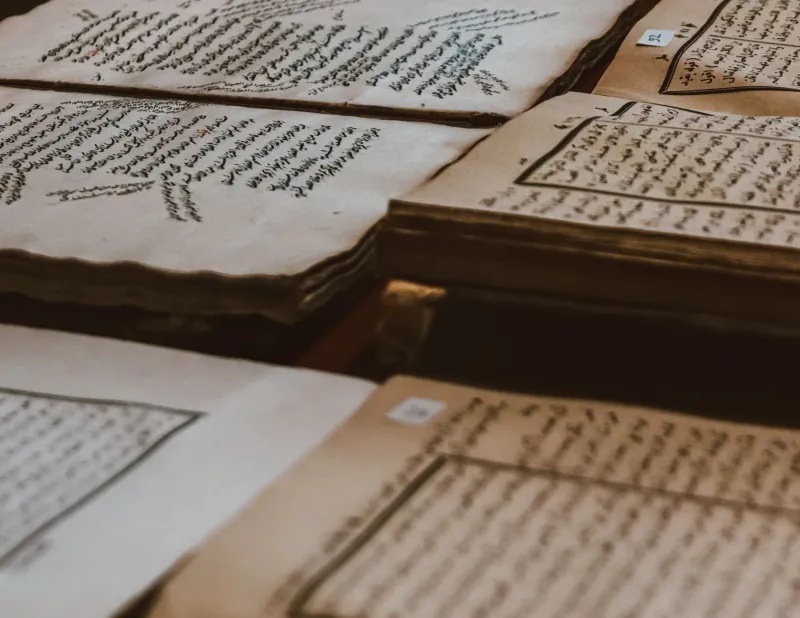
In a climate-controlled room at a university library in New England, there are boxes of documents written in a script that approximately forty living people can read. The documents are from the nineteenth century. They describe, in careful notation, the daily rhythms of a community that no longer exists in the form it once took. The handwriting is elegant. The information is irreplaceable. And unless something changes, the number of people who can access it will continue to decline until it reaches zero, and then the documents will become objects — beautiful, historical, and completely silent.
This is the situation facing dozens of specialized writing systems across the United States: not just indigenous scripts, which have received some cultural attention in recent years, but the stranger, more obscure corners of American orthographic history. The Shaker musical notation system, which used a letter-based cipher rather than standard musical notation, and which documented the entire sonic culture of a religious community now reduced to a handful of members. The Pitman shorthand variants that proliferated across American offices from the 1880s through the mid-twentieth century, leaving behind millions of documents — diaries, letters, business records — that are now effectively encrypted. The constructed scripts invented by utopian communities, reform movements, and eccentric individuals who believed, with varying degrees of justification, that they had improved on the alphabet.
These are not footnotes. They are time capsules with broken locks.
The People Who Noticed
Preservation movements tend to begin with a single person who finds something alarming and cannot let it go.
For Helen Chu, a retired librarian in Portland, Oregon, the alarm was a box of her grandmother's personal correspondence, written in a Gregg shorthand variant that Chu had never learned and that none of her family members could read. "I knew she'd written about her life in there," Chu says. "I could see it was personal — the handwriting changed speed in certain places, the way it does when someone is writing something that matters to them. And I couldn't read a single word."
Chu spent two years learning Gregg shorthand from archival manuals and YouTube videos of uncertain reliability before she could access her grandmother's letters. The experience radicalized her. She now runs a small but active online community dedicated to teaching and preserving shorthand systems, with particular focus on the variants that were most widely used by women in clerical and secretarial roles throughout the twentieth century.
"There's an enormous archive of women's lives written in shorthand that nobody is reading," she says. "Because shorthand was considered a skill for secretaries, it was never treated as culturally important. But those women documented everything. And it's all sitting there, inaccessible."
What Gets Lost When a Script Dies
The easy answer is: information. Documents become unreadable. Histories become inaccessible. The hard answer is more complicated.
Writing systems are not neutral containers. They shape what gets said and how it gets said. Shaker musical notation, for instance, was designed specifically to represent the musical tradition of Shaker worship — a tradition that emphasized simplicity, communal participation, and a relationship to sound that was theologically specific. When you transcribe Shaker music into standard Western notation, you can preserve the pitches and the rhythms. You cannot fully preserve the framework of meaning in which those pitches and rhythms existed.
"Every script carries assumptions about what language is for," says Dr. Amos Whitfield, a historical linguist at a research university in the South who specializes in extinct and endangered writing systems. "When you lose a script, you don't just lose a tool. You lose a way of organizing knowledge. Sometimes those ways of organizing knowledge are the only record we have that a different approach was possible."
This is the argument that animates the more philosophically inclined preservationists: that orthographic diversity is, like biodiversity, a hedge against the future. The writing systems we're letting disappear might contain solutions to problems we haven't encountered yet.
The Digital Double-Edged Sword
The internet has done strange and contradictory things to the project of preserving endangered scripts.
On the one hand, it has been genuinely transformative. Archives that were previously accessible only to researchers with institutional affiliations and travel budgets are now available to anyone with a browser. The community of people learning obsolete shorthand systems, or working to document regional notation practices, is larger and more connected than it has ever been — not because interest has increased, but because the interest that always existed can now find itself.
On the other hand, the internet has an overwhelming preference for the legible, the shareable, and the immediately comprehensible. A script that requires months of study to read is not going to go viral. The platforms that distribute information most effectively are optimized for content that moves fast and lands immediately — which is almost the opposite of what an extinct writing system requires from its audience.
"Unicode has been incredible for some scripts," says Whitfield. "If a writing system gets a Unicode block, it becomes digitally usable. You can type in it. You can search for it. You can send it in a text message. That's huge." He pauses. "But the Unicode Consortium has a backlog. And the scripts that get prioritized tend to be the ones with the most active advocacy communities. Which means the scripts spoken by the smallest or most marginalized communities are last in line. Again."
The Reconstructors
Some of the most interesting work in this space is not preservation but reconstruction — the attempt to bring back writing systems that have already gone fully extinct, using whatever documentary evidence survives.
In Philadelphia, a small collective of designers and historians has spent three years attempting to reconstruct a shorthand system developed by a nineteenth-century African American educator who believed that standard orthography was a tool of exclusion. The system was documented in a single surviving pamphlet, partially damaged. The collective has been filling in the gaps using forensic analysis of the pamphlet's internal logic and consultation with historical linguists.
"We'll probably never know if we got it right," admits Dara Simmons, one of the collective's founders. "But getting it right isn't entirely the point. The point is demonstrating that it existed. That someone thought hard enough about language and power to build an alternative. That's worth knowing."
This is preservation as argument — the insistence that what a writing system represents, the intellectual and political act of its creation, has value independent of its practical utility.
Why It Matters That Letters Die
At ABCDF∞, we are constitutionally incapable of being neutral about alphabets disappearing. Our entire premise is that letters are not just tools — they are positions, arguments, identities. When a writing system dies, something that someone built to make sense of the world stops making sense of anything.
The people doing this preservation work are not, for the most part, funded well or celebrated loudly. They are retired librarians and graduate students and hobbyists who stumbled into an archive and couldn't walk away. They are the right people for the job, which is to say they are the people who showed up.
The boxes in the climate-controlled room are still there. The documents are still waiting. And somewhere, someone is learning to read them.