Type the Wrong Address and Find Art: The Golden Age of Deliberately Broken URLs
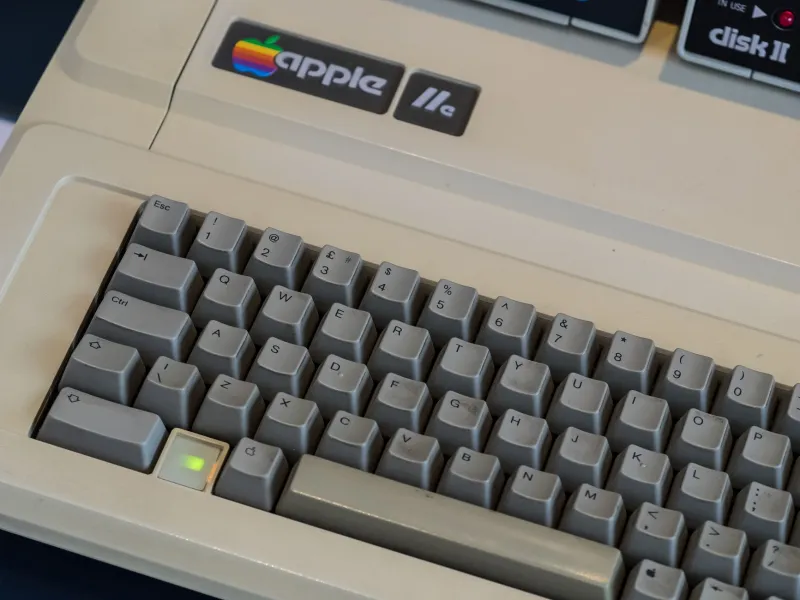
Somewhere around 1997, a person sat down at a keyboard, opened a domain registrar, and typed something completely unpronounceable. Not a typo. Not a placeholder. An act of pure, premeditated creative chaos.
They hit register. They paid the twelve bucks. And they built something that had no business existing on the internet — or anywhere else.
This is a story about those people. And about the strange, overlooked idea that the address bar of your browser was always, secretly, a canvas.
The Address Bar as Artistic Statement
Here at ABCDF∞, we spend a lot of time thinking about what letters do when they're cut loose from expectation. Usually that conversation is about typography, or poetry, or the kind of neon sign that's been flickering since 1974. But the URL — that little string of characters sitting at the top of your screen — turns out to be one of the most underappreciated typographic spaces in human history.
Think about it. A domain name is, at its core, a sequence of letters with rules. It has to end a certain way. It can't be too long. It needs to resolve somewhere. Those constraints are exactly the kind of fence that a certain breed of artist looks at and immediately wants to dismantle.
Net.art — the loosely organized movement of web-based experimental work that flourished in the mid-to-late 1990s — understood this instinctively. Artists like Jodi.org (yes, the dot-org was part of the name, part of the joke, part of the point) used their URLs not as signposts but as first impressions that set the tone for everything that followed. You weren't just visiting a website. You were already inside the piece before the page loaded.
Unpronounceable by Design
There's a specific pleasure in a domain name that cannot be said aloud without embarrassing yourself. The early web was full of them — long strings of consonants, deliberate misspellings, numbers jammed between letters in ways that made your brain stutter. These weren't accidents. They were the digital equivalent of a painting hung upside down and titled This Side Up.
The logic, if you can call it that, went something like this: a clean, memorable URL signals trustworthiness, commerce, legibility. So an unclean, unmemorable URL signals the opposite — mystery, refusal, the suggestion that whatever is at the other end of this address does not particularly want to be found by people who aren't paying attention.
It was gatekeeping through orthography. And it worked beautifully.
Some of these projects were genuinely difficult to reach. You had to copy the URL from a printed zine, or hear it spoken at a gallery opening, or receive it in an email from someone who described it as "this thing I can't really explain but you should go look at it." The friction was the feature. The alphabet, deliberately mangled, was doing the bouncing.
What Lives at the Weird Addresses Now
Here's the thing about experimental URL projects: most of them are dead. The domain lapsed. The hosting expired. Someone forgot to renew. The internet is, among other things, a vast graveyard of bizarre addresses that once led somewhere interesting and now lead to a parking page selling you the domain for $3,400.
But not all of them. And the ones that survived are worth hunting.
Conceptual web projects from the early 2000s still lurk in corners of the internet that search engines have largely given up on indexing. They exist in that peculiar digital purgatory where they're too old to be relevant and too weird to be archived properly. Finding them requires the same energy as flipping through a bin of unlabeled VHS tapes at a Goodwill in rural Ohio — patience, tolerance for disappointment, and a genuine openness to being confused.
The contemporary descendants of this tradition are, if anything, more ambitious. Today's experimental URL artists are working with the expanded real estate of newer top-level domains — the dot-art, dot-wtf, dot-xyz extensions that opened up the address space in ways the original net.art crowd could only dream about. A project address that ends in .wtf is already communicating something before you've seen a single pixel of the actual work.
The Alphabet Breaks Its Own Rules
What makes a URL-as-art project succeed is the same thing that makes any constrained art form succeed: the constraint has to be visible. You have to feel the edges of the box to appreciate that someone is pushing against them.
The alphabet, in its standard configuration, is already a constraint. Twenty-six letters, arranged in an order nobody agreed to and everybody inherited. ABCDF∞ exists, in part, because that sequence is a dare. What happens when you skip a letter? What happens when you add one? What happens when you register a domain that suggests the alphabet itself forgot something?
That last question is not hypothetical. There are domain names out there — real, registered, occasionally functional — that appear to be missing letters. Or to have too many. Or to contain characters that technically shouldn't be allowed but somehow got through. These are the URL equivalent of a sentence that ends before it's
The period at the end of that last paragraph isn't a typo. It's a tribute.
Why It Matters That You Can't Google It
The death of discoverability is, paradoxically, what gives URL-based art its staying power. In an era when everything is findable, searchable, and delivered to you by an algorithm that already knows you want it, the idea of artwork that requires you to know the address is almost romantic.
You can't stumble onto it. You can't have it recommended. You have to type the letters — the exact right letters, in the exact right order — or you don't get in.
That's not a bug. That's the whole alphabet doing its job: keeping meaning locked behind sequence, rewarding the people who show up with the right combination and turning away everyone else.
Somewhere, right now, there's a domain registered under a name that looks like a keyboard error. It's been live since 2003. Nobody's updated it. The HTML is table-based and the colors are wrong and the text is in a font that no longer ships with any operating system.
It's the best thing on the internet.
You just have to type the right letters to find it.